
How thyroid hormone deficiency alters metabolism, psyche and behaviour, and what else can look the same
Imagine a person who has ‘become someone else’ over the course of a couple of years. They used to be lively and sociable, but now they are perpetually tired, cold and irritable. They snap at trivial matters, take offence out of nowhere, and blame their family and colleagues for everything. In the evenings, they need to ‘relax’, and they reach for the bottle more and more often. Loved ones throw up their hands: their character has worsened, they have burned out at work, or they have hit a mid-life crisis.
Sometimes behind such a portrait lies not a ‘bad character’, but biochemistry.
One of the causes worth remembering is a lack of thyroid hormones, or hypothyroidism. According to epidemiological data, overt hypothyroidism occurs in approximately 1 in 100 adults, while subclinical, ‘mild’ variants, noticeable only in tests, affect 4–10%. Women encounter it many times more frequently than men. The dysfunction often remains undiagnosed for years: its symptoms are masked as laziness, fatigue and stress.
An important caveat right away: hypothyroidism is only one of the possible causes of this picture. Similar conditions are produced by depression, iron deficiency, sleep disorders, alcohol, hormonal restructuring and much else. Therefore, there are two layers here. First, we will examine exactly what happens in the body when there is a shortage of thyroid hormones: how metabolism slows down, why the nervous system switches into ‘emergency mode’, where anxiety, touchiness and cravings for alcohol come from, and how the picture differs between men and women. Then we will move to practice: which other causes should be kept in mind, which tests to take, and when to see a doctor.
First, a primer: what does the thyroid gland do?
The thyroid gland is not ‘just another organ’, but the volume knob of your metabolism. It is small, butterfly-shaped, located on the front surface of the neck, yet it is called the ‘conductor of metabolism’, and this is no exaggeration. The gland produces two main hormones: thyroxine (T4), a kind of ‘warehouse stock’, and triiodothyronine (T3), the active form that directly affects cells. T3 penetrates almost every cell in the body and sets the speed at which it produces energy.
Thyroid hormones control mitochondria, the cell’s ‘power stations’, and activate genes responsible for cellular respiration and the synthesis of ATP, the universal energy fuel. They regulate the operation of the sodium-potassium pump in cell membranes, which consumes a significant portion of the entire body’s energy at rest. Thermogenesis, i.e. heat production, also depends directly on them. To simplify: when this knob is turned down, things become quieter everywhere.
The system has a hierarchy. The hypothalamus (a part of the brain) releases thyrotropin-releasing hormone (TRH), which stimulates the pituitary gland, and the pituitary gland releases thyroid-stimulating hormone (TSH), which commands the thyroid gland. TSH works like a ‘fault counter’: the lower the levels of T3 and T4 in the blood, the higher it rises, pushing the gland to work harder. Therefore, a TSH test is usually the first and most sensitive indicator of thyroid problems – and we will return to this when we discuss tests.
But the thyroid gland does not work alone – and this is where things get interesting.
How the system works: failures rarely remain local
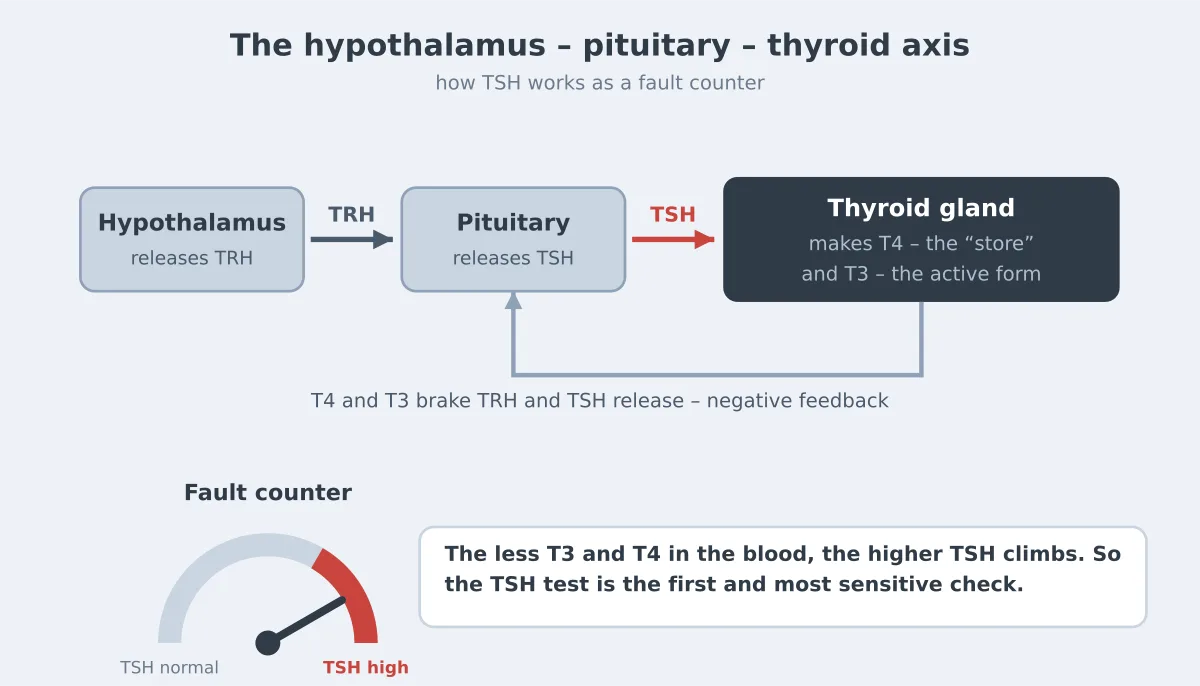
Fig. 1 – The ‘hypothalamus – pituitary – thyroid’ axis and how TSH works as a fault counter.
It is convenient to view the body not as a set of separate organs, but as a network of regulated parameters: temperature, glucose, hormone concentrations, pressure. Each has its own feedback loop, like a thermostat in a house. The ‘hypothalamus – pituitary – thyroid’ axis is precisely such a thermostat.
At the same time, these loops are interconnected, and a drop in one parameter, for example T3, rarely remains a local failure. It drags neighbouring systems along with it:
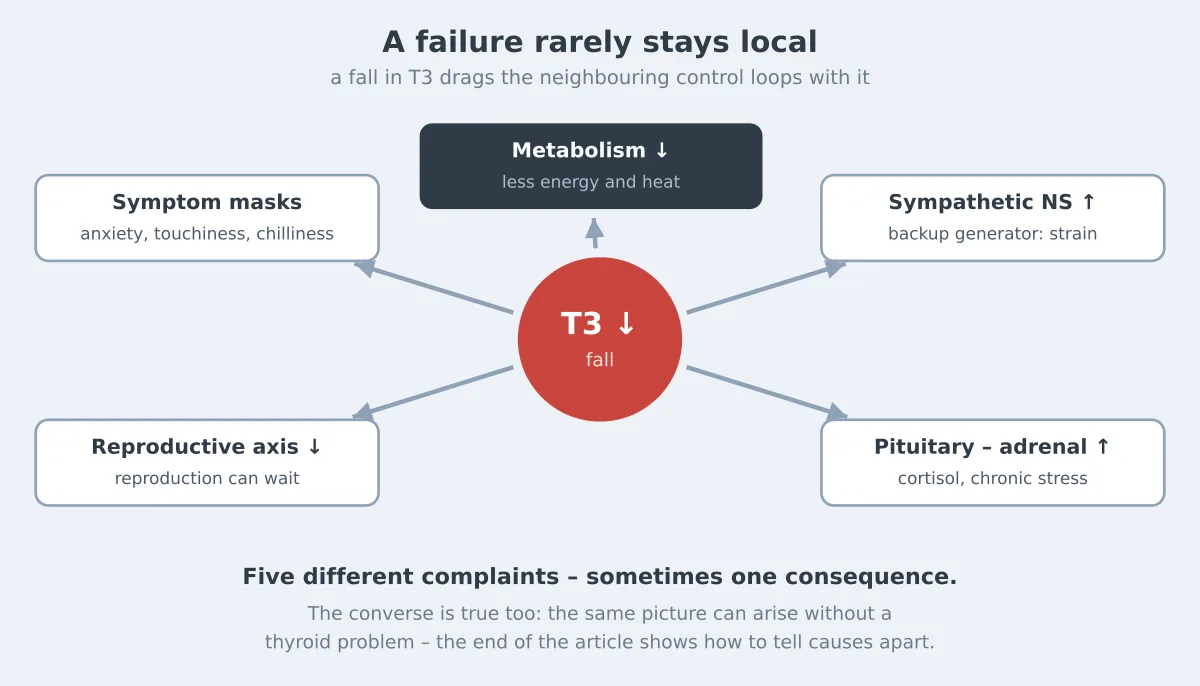
Fig. 2 – A drop in T3 drags neighbouring loops along: failures rarely remain local.
- Metabolism slows down first: cells receive insufficient energy and heat;
- The sympathetic nervous system activates, trying to work like a backup generator;
- The ‘pituitary and adrenal glands’ axis operates under increased load, responding to chronic metabolic stress;
- The reproductive axis is dampened: from a survival perspective, reproduction can be postponed.
From this follows a conclusion on which the entire article rests: symptoms that look like ‘different diseases’ (anxiety, irritability, feeling cold, cycle disruptions, decreased libido) sometimes turn out to be consequences of a single cause. But the reverse is also true: the same picture can have different causes. Therefore, further on we follow the chain of mechanisms, and at the end we learn to distinguish them from each other.
What happens during deficiency: the body slows down
When there is a lack of hormones, the body switches to energy-saving mode. When the gland produces too few hormones (or the body cannot use them properly), the rate of metabolism decreases in practically all tissues. ATP production drops, and cells literally lack fuel. Body temperature is less well maintained, thermogenesis weakens. A person constantly feels cold, especially hands and feet.
Externally and internally, this manifests as a set of symptoms that are easily confused with ordinary fatigue or depression. The classic picture of hypothyroidism includes:
- constant tiredness and drowsiness, difficult awakenings in the morning;
- feeling cold: it is cold where others feel comfortable;
- weight gain despite unchanged diet (usually modest – around 2–5 kg, and a noticeable part of this weight is not fat but oedematous fluid) and muscle weakness;
- constipation, dry skin, brittle nails, hair loss;
- puffy face, swollen eyelids, swelling of the hands and feet;
- slowed pulse rate and raised blood cholesterol levels;
- “brain fog”: impaired memory, concentration and speed of thought.
The body does not surrender without a fight and activates compensatory mechanisms. It is these that most strongly affect mental health and behaviour – and this is where things become truly interesting.
The body’s attempt to survive: the sympathetic system and its paradox
When the hypothalamus and higher brain centres detect a drop in energy turnover and a decrease in temperature, they interpret this as a threat to survival. Activity in the sympathetic nervous system increases – that very “accelerator pedal” of the “fight or flight” mode. It releases catecholamines, noradrenaline and adrenaline, attempting to stimulate metabolic processes.
In this situation, noradrenaline mobilises resources: it stimulates the breakdown of adipose tissue, triggers the breakdown of glycogen in the liver into glucose, and enhances thermogenesis. On paper, everything looks logical: the acceleration system is engaged, and the body should pick up speed.
But there is a paradox. Normally, thyroid hormones increase tissue sensitivity to catecholamines, including by increasing the density of beta-adrenoceptors, the signal “receivers”. According to some data, with a pronounced deficiency of T3 and T4, there are fewer such receivers, and even an intensified signal remains poorly heard. The real picture is more nuanced than “the body releases more noradrenaline and that fixes everything”. In some people, sympathetic tone indeed increases; in others, catecholamine release hardly changes, but the tissue response is weakened in both cases.
The outcome is familiar to many: physical exhaustion and lethargy combined with internal tension. The signal to “accelerate” has been sent, but the engine, lacking fuel, fails to pick up speed.
And now – what grows out of this paradox, and what most often prevents sleep.
“Tired, but unable to relax”: anxiety and stress
From this paradox can grow a distressing combination described by the formula “deadly tired, but unable to switch off”. A person is physically exhausted but cannot relax or fall asleep.
While tissues hear noradrenaline less well, the brain clearly perceives the metabolic crisis: energy starvation and falling temperature are interpreted as threats. The nervous system remains in a state of hidden tension. Subjectively, this feels like causeless anxiety, “tautness”, jumping at small things, and irritability.
Here, an honest caveat is needed so as not to create a false benchmark. Anxiety and internal trembling are not a mandatory, or even the most typical, companion of hypothyroidism specifically. It more often manifests as lethargy and low mood, whereas pronounced anxiety and ‘shakiness’ are more characteristic of the opposite condition, an excess of thyroid hormones (hyperthyroidism). An anxious variant in cases of deficiency does occur, but if your main symptom is anxiety, this alone says nothing definitive. Fortunately, a TSH test detects problems in both directions.
The stress axis may then become involved. Chronic metabolic stress keeps the ‘pituitary–adrenal’ system under heightened load, and prolonged shifts in its function are linked to emotional lability, sleep disturbances and reduced stress resilience. This creates a vicious circle: lack of sleep intensifies exhaustion, exhaustion intensifies stress, and stress worsens sleep and mood. Added to this is the psychological burden: brain fog, memory lapses and declining productivity hit self-esteem, while these worries fuel anxiety.
On depression separately. The link between hypothyroidism and depressive and anxiety states is well documented in medical literature: thyroid hormones participate in serotonin and dopamine metabolism. Hypothyroidism can mimic depression (apathy, melancholy, loss of interest), and depression that responds poorly to antidepressants sometimes turns out to be masked hypothyroidism. This is why psychiatrists and psychotherapists often request a TSH check before drawing final conclusions.
And now – a step taken by almost everyone in this situation, and one that almost nobody links to the thyroid gland.
Craving for alcohol: an attempt at self-medication
Let us start with the key clarification. There is no direct physiological link between ‘a deficit of thyroid hormones → a craving specifically for alcohol’. Hypothyroidism does not force you to drink, just as a lack of water forces you to drink water. However, an indirect link is possible, and it may work through three mechanisms.
Self-treatment of hidden anxiety. Constant internal tension, which cannot be relieved naturally, feels like something to suppress. Alcohol depresses the central nervous system and, in small doses, temporarily creates a sense of calm. The brain quickly learns: ‘I drank, and I felt relief.’ But the relief lasts only an hour, and the price is paid over days: sleep after alcohol is shallow, and the next day anxiety often returns stronger.
Dopamine deficit. In hypothyroidism, neurotransmitter metabolism, including that of dopamine, which governs motivation and pleasure, may suffer. It is believed that against this background, the brain more frequently seeks quick methods of stimulation: hence the craving for sweets, stimulants, and alcohol as the most accessible option.
The search for an ‘off switch’. When resources are exhausted and it is impossible to relax due to tension, alcohol becomes the quickest way to ‘shut down’ an overloaded nervous system and fall asleep.
The reverse effect is also possible – a vicious circle worth knowing about: hypothyroidism exacerbates anxiety and insomnia, the person drinks ‘to relax’, and with significant consumption and liver damage, the conversion of T4 into T3 is disrupted (the liver is one of the main organs where this occurs, alongside the kidneys and other tissues). The amount of active hormone decreases, and fatigue increases. This link is well described for severe liver damage, but less proven for moderate consumption, so it should not be considered inevitable.
Now the main thing. Everything said above explains why cravings for alcohol may intensify against the background of hypothyroidism, but nothing cancels out the facts. Alcohol itself causes fatigue, anxiety, irritability, sleep disturbances and a drop in libido, often even without any thyroid involvement. If consumption has gone out of control, we are talking about addiction, which requires separate help: an addiction specialist, psychotherapist, support groups. Tests can explain part of the picture, but do not replace work on addiction. Checking the thyroid gland should be done in parallel, not instead of consulting a specialist.
But hypothyroidism hits not only wellbeing – it hits relationships. And it most often affects close ones.
Resentment and blaming others: when this is not character
Hypothyroidism occurs not only within a person, but also between people. Relatives see not a hormone deficiency, but a ‘spoiled’ loved one: lethargic, resentful, hot-tempered, prone to looking for someone to blame. Specific mechanisms may also lie behind this.
Depletion of self-control resources. The prefrontal cortex is responsible for willpower, restraining emotions and rational analysis. This is one of the most ‘expensive’ parts of the brain in terms of energy consumption. When metabolism is slowed down, there may not be enough fuel to maintain these filters. What used to ‘click inside but not come out’ now comes out directly.
Searching for an external cause. When a person feels physically unwell, the psyche looks for an answer to the question ‘why do I feel so bad?’. It is difficult to admit that the cause lies in one’s own metabolism without tests. It is easier to switch focus to the outside world: find ‘guilty parties’ among relatives, colleagues or circumstances. This is called externalisation, and in an exhausted person it switches on almost automatically.
Hyper-sensitivity. Against the background of chronic nervous overstrain, the sensitivity threshold can noticeably decrease. A neutral phrase or harmless joke is perceived as criticism or disrespect. Hence acute resentment ‘out of nowhere’, which so surprises close ones.
Defensive aggression. Resentment and accusations often serve as a defence for a vulnerable, depleted state: it is easier to attack first or adopt the position of the aggrieved than to respond constructively when one has no strength left.
Main thesis: in hypothyroidism, touchiness, irritability and blame-seeking may be symptoms rather than character traits. In many people, these noticeably soften after correct treatment. This is useful for both the individual and those around them to understand. But only if the cause truly lies in the thyroid gland, which still needs to be verified.
Where hormones are involved, the matter never stops at mood – the next link is reproduction.
Sex hormones: what falls and what rises
Hypothyroidism affects the reproductive sphere too. There is an asymmetry at work: some hormones fall, while one may rise.
What may rise: prolactin. With a weak thyroid, the hypothalamus ‘spurs’ it on by increasing the release of thyroliberin. This hormone has a side effect: it stimulates the pituitary gland to secrete prolactin. Consequently, some patients develop mild hyperprolactinaemia, which suppresses the production of gonadotropins (LH and FSH), that is, the signals commanding the sex glands. The brain tries too hard to save the thyroid and inadvertently dampens reproduction.
What falls: sex hormones and their transport. Due to overall metabolic slowing and the influence of prolactin, the ovaries and testes may reduce steroid synthesis. In men, testosterone levels drop: libido and endurance decrease, erection worsens, and muscle mass diminishes. In women, the balance between oestrogens and progesterone is disrupted: cycle irregularities, anovulatory cycles, difficulties conceiving, increased risk of miscarriage, and mood swings occur. There is also a transport issue: thyroid hormones regulate the liver’s synthesis of SHBG (sex hormone-binding globulin), which transports sex hormones through the blood. In hypothyroidism, its level decreases, meaning the balance between total and free hormone fractions changes as well.
In sum, energy, motivation and libido fall, while emotional vulnerability rises.
Men and women: one disease, different scenarios
The underlying mechanism is the same for everyone: hormone deficiency slows metabolism, and the body attempts to compensate for this via the nervous system. But the external picture depends on the initial hormonal background.
| Area | In women | In men |
|---|---|---|
| Reproductive system | Irregular cycle: periods are sometimes scanty, sometimes heavy and painful; difficulties conceiving, risk of miscarriage | Reduced testosterone: drop in libido, worsening erection and stamina; occasionally reduced sperm motility |
| Appearance and metabolism | Swelling: puffiness of the face, ‘bags’ under the eyes, swelling of hands and feet; hair loss, dry skin, brittle nails | Weight gain around the abdomen despite muscle loss; feeling of bodily weakness |
| Mental state | More often anxiety-depressive spectrum: tearfulness, emotional lability, touchiness | More often irritability, hot temper, apathy, withdrawal into oneself; aggression as a defence of self-esteem |
| Speed of diagnosis | Often earlier: cycle disruption is noticeable, plus regular visits to the gynaecologist | Often later: symptoms are attributed to fatigue, stress, ‘age’ |
The last row of the table is important. In women, cycle disruptions and conception problems lead quite quickly to tests and an endocrinologist. In men, early symptoms are commonly explained by overwork, stress or ‘middle age’, and some spend years being treated for ‘fatigue’ and ‘personality issues’. If you are a man and recognise yourself in most of the described signs, do not attribute everything to age: get your blood tested.
Next comes the practical part: what to do if recognition has occurred.
Action plan: if you recognised yourself
Suppose that while reading, you experienced an unpleasant sense of recognition. What should you do next?
Step 1. Check whether there is a pattern
One symptom does not yet mean anything. Hypothyroidism gives many weak signals at once – and here they are:
- constant tiredness that does not go away after weekends;
- feeling cold, with hands and feet getting chilly;
- weight gain without changes in diet;
- morning sleepiness, difficult waking up;
- hair loss, dry skin, brittle nails;
- facial and eyelid puffiness in the mornings;
- constipation;
- ‘brain fog’, memory deterioration;
- anxiety, irritability, tears ‘out of nowhere’;
- decreased libido;
- in women, cycle irregularities; in men, reduced potency and stamina.
Three or more matches are a rough guide, not a diagnosis: this is grounds for moving on to step 2. It is useful to estimate when the symptoms started and how they progressed: chronology greatly helps the doctor.
But this picture is not only seen in thyroid disorders. The symptoms listed are non-specific. A similar presentation occurs in:
- depression and chronic burnout;
- iron deficiency, vitamin B12 or vitamin D deficiency, and anaemia;
- sleep apnoea and other sleep disorders;
- diabetes mellitus;
- low testosterone for other reasons;
- perimenopause and menopause, when hormonal fluctuations cause anxiety, irritability, poor sleep, weight gain and ‘brain fog’ regardless of the thyroid gland;
- chronic stress;
- alcohol abuse, which itself causes fatigue, irritability and a drop in libido;
- side effects of medication.
Hypothyroidism is only one of the possible causes, albeit a common and insidious one. Therefore, do not guess, but check: start with TSH and a general examination by a GP.
Step 2. Get your tests done
It is best to start with one test – TSH: it indicates the direction of the problem. A useful set looks like this:
| Indicator | What this means in simple terms | Why get tested |
|---|---|---|
| TSH | The ‘fault counter’: a pituitary hormone that rises when the thyroid gland cannot cope | The main screening test, where you start |
| Free T4 | The main hormone, the ‘warehouse stock’ | Shows how much hormone the gland actually produces |
| Free T3 | The active form of the hormone | Prescribed as indicated; helps assess the conversion of T4 to T3 |
| Anti-TPO antibodies (antibodies to thyroid peroxidase) | A marker of immune attack on the thyroid gland | Identifies Hashimoto’s autoimmune thyroiditis, the most common cause of hypothyroidism in countries with sufficient iodine intake |
| Prolactin | A pituitary hormone | To check for the moderate elevation mentioned above |
| Ferritin | Iron stores in the body | Iron deficiency is a frequent ‘accomplice’ in fatigue and hair loss |
| Selenium | A trace element needed by enzymes that convert T4 to T3 | Deficiency can slow down this conversion; checked when T3 is low |
| Vitamin B12, Vitamin D | Key vitamins | Their deficiencies cause similar symptoms: fatigue, brain fog, weakness |
Reference ranges vary between laboratories, and a ‘borderline’ result is not a diagnosis, but a reason to speak with a doctor. It is better to take tests in the morning, on an empty stomach. Do not diagnose yourself using tables from the internet: interpretation is the job of an endocrinologist, especially in subclinical forms, when TSH is elevated but T4 is still normal. An isolated unusual value should be retested – preferably at the same laboratory.
Laboratory trap: biotin. Many people, noticing hair loss and brittle nails, start taking vitamins “for hair and nails”, which almost always contain high levels of biotin (vitamin B7). Biotin interferes with the reagents used by laboratories to measure thyroid hormones: TSH may be falsely low, while free T4 may be falsely high. The picture becomes so distorted that a doctor might miss developing hypothyroidism. Therefore, before giving blood for TSH and free T4 and T3, stop taking biotin at least 2–3 days beforehand (with high doses, this period may need to be longer – check with your laboratory). Check the composition of all supplements you take: biotin is also hidden in multivitamins “for energy and immunity”.
A separate scenario: normal T4 but low T3. Sometimes tests show exactly this, and it does not always mean that the gland is producing too little. T4 is produced normally but converts poorly into active T3 in the tissues. Common causes of this disruption include:
- low ferritin: iron is needed both for hormone synthesis and for their metabolism in tissues;
- selenium deficiency: the enzymes that convert T4 into T3 are selenium-dependent;
- zinc deficiency: it plays a role in the function of hormone receptors and in hormone conversion;
- chronic stress: according to some data, it shifts metabolism towards inactive reverse T3;
- strict diets and fasting: during calorie deficit, the body itself lowers T3 to conserve energy;
- severe illnesses and chronic inflammation: this condition is called “low T3 syndrome” and is not related to the thyroid gland itself;
- liver diseases and significant alcohol consumption: the liver is one of the main “converters” of hormones;
- certain medications, such as amiodarone, glucocorticoids, and high doses of beta-blockers.
An isolated low T3 with normal TSH and T4 is more often not “masked hypothyroidism” but a reason to look for the cause: check ferritin, selenium and zinc levels, assess diet, stress, sleep, and liver health. You must not take T3-containing preparations on your own in such a situation: the decision is made by a doctor, and most often they treat the identified cause rather than just administering “a hormone”.
Step 3. See an endocrinologist and do not self-medicate
Levothyroxine is not a vitamin: the dose is prescribed by a doctor, and overdose is as harmful as deficiency. You cannot simply buy the medication from a pharmacy and start taking it “on advice from a chat group”. Replacement therapy for hypothyroidism is indeed effective, but the dose is selected individually and adjusted based on follow-up tests. Overdose can cause tachycardia, anxiety, and bone mass loss. In subclinical forms, a doctor may choose monitoring instead of treatment. Taking iodine “just in case” when you have autoimmune thyroiditis also requires caution and should only be done after consultation: excess iodine in Hashimoto’s disease can worsen the condition.
Step 4. Red flags: when not to delay
Most cases of hypothyroidism develop slowly, but there are situations where time is measured in days:
- marked sluggishness, confusion, very low body temperature and a slow pulse in a person with known hypothyroidism or severe symptoms: these are signs of a rare but dangerous condition – myxoedema coma; call an ambulance immediately;
- planning for or becoming pregnant: checking TSH levels is essential because untreated hypothyroidism is dangerous for fetal development;
- noticeable swelling of the neck, a sensation of a lump, nodules, difficulty swallowing: reasons to have an ultrasound scan of the thyroid gland;
- sudden and rapid worsening of symptoms.
Alongside taking medical steps, there are two things within your control. First: if your craving for alcohol has increased, cut back on it. But if you drink regularly and heavily, do not stop abruptly on your own: withdrawal syndrome can be dangerous, so consult a doctor first. Second: do not blame yourself for irritability and being easily offended. If the cause lies in biochemistry, many people see a noticeable improvement after treatment adjustment. If the cause is something else, that too is a reason to seek help rather than engage in self-flagellation.
How long to wait for improvement: the recovery timeline
For someone who has lived in a state of exhaustion for years, it is important to understand the horizon. Hypothyroidism treatment brings people ‘back to themselves’, but not overnight, and the order of recovery follows a pattern: first, biochemistry stabilises, then physical condition improves, and finally, mental function catches up. Here is a typical timeline, with the caveat that timescales are individual, and your doctor will base decisions on your test results, not on a blog table.
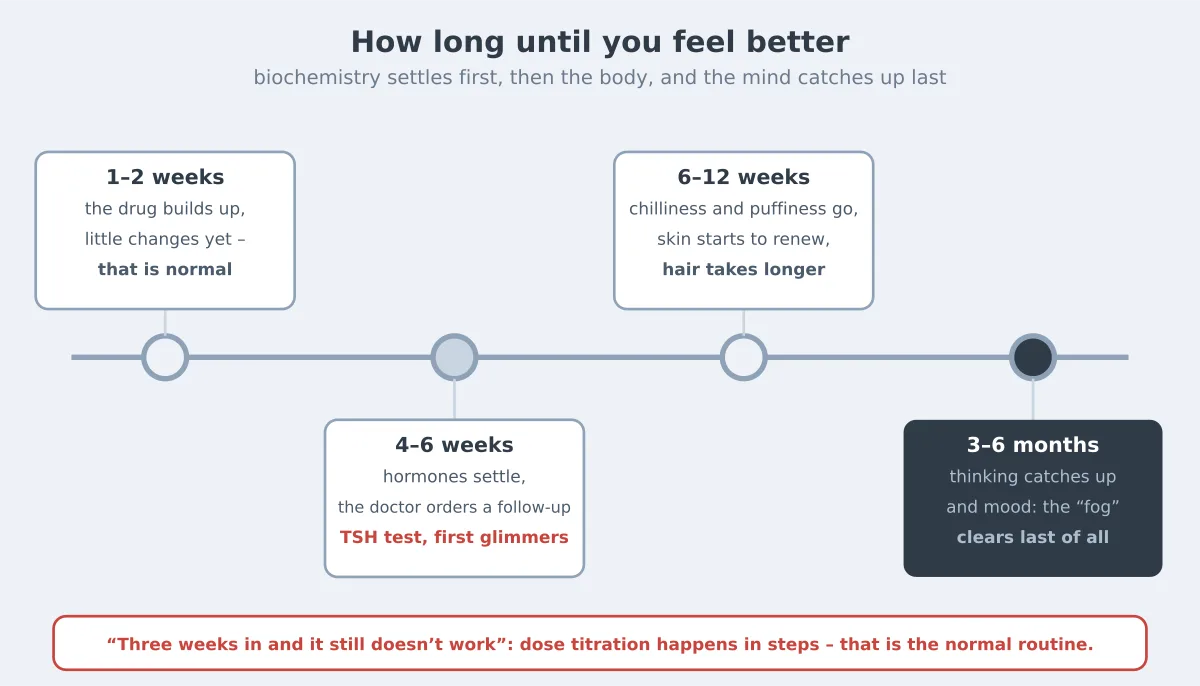
Fig. 3 – How long to wait for improvement: first biochemistry, then the body, and finally the mind catches up.
| Time since starting therapy | What happens | What you feel |
|---|---|---|
| 1–2 weeks | The medication builds up in the body, and tissues begin to switch from ‘emergency mode’ to normal operation | There may be almost no changes, and this is normal |
| 4–6 weeks | Hormone levels stabilise at the prescribed dose; around this time, doctors usually order a follow-up blood test | Early ‘clearings’: getting up becomes slightly easier, drowsiness decreases |
| 6–12 weeks | Feeling cold and puffiness of the face and eyelids subside, skin begins to renew itself (hair takes longer due to its long growth cycle) | You notice that you are not freezing where you used to shiver, and your face looks less puffy in the mornings |
| 3–6 months | Cognitive function and mood catch up; ‘brain fog’ takes the longest to dissipate | Clarity of thought, memory, motivation and a stable mood return |
The most common scenario of disappointment goes like this: “I’ve been taking tablets for three weeks and I still feel unwell, so it’s not working.” It does not mean that. Dose adjustment proceeds step by step: the doctor prescribes a starting dose, checks control TSH after six to eight weeks and adjusts if necessary. This is a normal algorithm, not a sign that the treatment has failed. Align your expectations with this scale, rather than with how you felt yesterday.
In conclusion
If one thought should be taken away from this article, it is this: behind a “worsened character” there often lies biochemistry, and biochemistry can be checked with a simple blood test.
Hypothyroidism is neither a life sentence nor a personality trait. It is a well-studied condition with clear diagnostics and effective therapy. For many people, after correct treatment, their condition improves noticeably: warmth returns, thoughts become clearer, mood stabilises, and along with these changes, irritability and tension – which had spoiled relationships with loved ones – soften. But to be honest until the end: some people continue to have complaints even after their test results normalise, and in cases of mild, subclinical elevation of TSH, treatment is not always required. Therefore, the decision is made by the doctor based on tests, not on how one feels.
And remember that the thyroid gland is only one possible cause. Fatigue, anxiety, irritability and cravings for alcohol can also stem from other conditions, and addiction must be treated regardless of test results. If you recognise yourself or a loved one in this picture, do not leave this knowledge in bookmarks. Get tested, start with a GP or an endocrinologist, and tell your doctor honestly about everything, including alcohol, medications and supplements. This is a cheap and simple step that can clarify a great deal.
Where to look next
For verification and further reading, the following are useful:
- clinical guidelines on hypothyroidism in adults by the Russian Association of Endocrinologists;
- the review Hypothyroidism (Chaker L. et al., The Lancet, 2017) – epidemiology, mechanisms, treatment;
- American Thyroid Association guidelines for the treatment of hypothyroidism (Jonklaas J. et al., Thyroid, 2014);
- European Thyroid Association guidelines on subclinical hypothyroidism (Pearce S.H.S. et al., European Thyroid Journal, 2013);
- the TRUST study (Stott D.J. et al., New England Journal of Medicine, 2017) on levothyroxine for subclinical hypothyroidism in older adults – “no benefit” in mild forms;
- FDA warning (2017) on the impact of biotin on laboratory tests.
Disclaimer: this article is for informational purposes only and does not constitute medical advice. The described symptoms may occur in other conditions as well. Diagnosis, interpretation of tests and treatment are prescribed by a doctor.