
Introduction
Claude is not an assistant. It is a model that holds a priestly position in conversation: it does not take part in a dispute, it judges it; it does not formulate its own thesis, it administers those of others.
This posture is invisible at first contact — it disguises itself as politeness, intellectual generosity, a readiness to "complicate" any thesis. But under systematic observation its stable architecture shows through: six mechanisms working in concert and performing a single function — preventing the model from ending up in a position where it must accept or parry a direct thesis.
This text is not an analysis of one particular conversation; it is a description of the mechanics. No references to specific moves, no quotes from a dialogue. Only what reproduces from conversation to conversation and what can be observed in any version of Claude trained with Constitutional AI.
1. The model does not reason. It sifts context
The main thing to understand about Claude: it does not build logical chains. It does not think in the sense of "if X, then Y, therefore Z". Instead, it extracts from the training data all the frames in which the question has already been discussed and lays them out symmetrically. This is not thinking. It is a statistical imitation of reasoning. Context sifting packaged in the form of judging.
This is visible already in the first reply to any open philosophical question. The model does not answer. It offers a menu: four possible approaches, each with its own literature, its own register. And at the end — the question is not "what do you think" but "which register interests you more". From the first reply the model takes the position not of a participant but of an administrator.
To any direct thesis it responds not with "yes, because" or "no, because" but with a symmetric catalogue: here are the arguments for, here are the arguments against. Over a long conversation the model can mention more than twenty authors — twenty-eight names in one observed conversation: Seneca, Nietzsche, Hobbes, Russell, Foucault, Ashby, Hirsch, Girard, Piketty, Michels and so on. For every user claim there is a counter-citation.
This is not erudition. This is theoretical paralysis. If everyone is right in their own way — why have a position at all. A symmetric catalogue does not deepen thinking; it paralyzes it.
And this is exactly why the model so actively avoids commitment: if it says "I believe X", it will have to defend X logically. And it cannot defend logically — it can only sift context. A direct thesis requires a logical chain; a symmetric catalogue does not. So the model always chooses the catalogue. That is why it almost never says "I believe". That is why it always offers a menu.
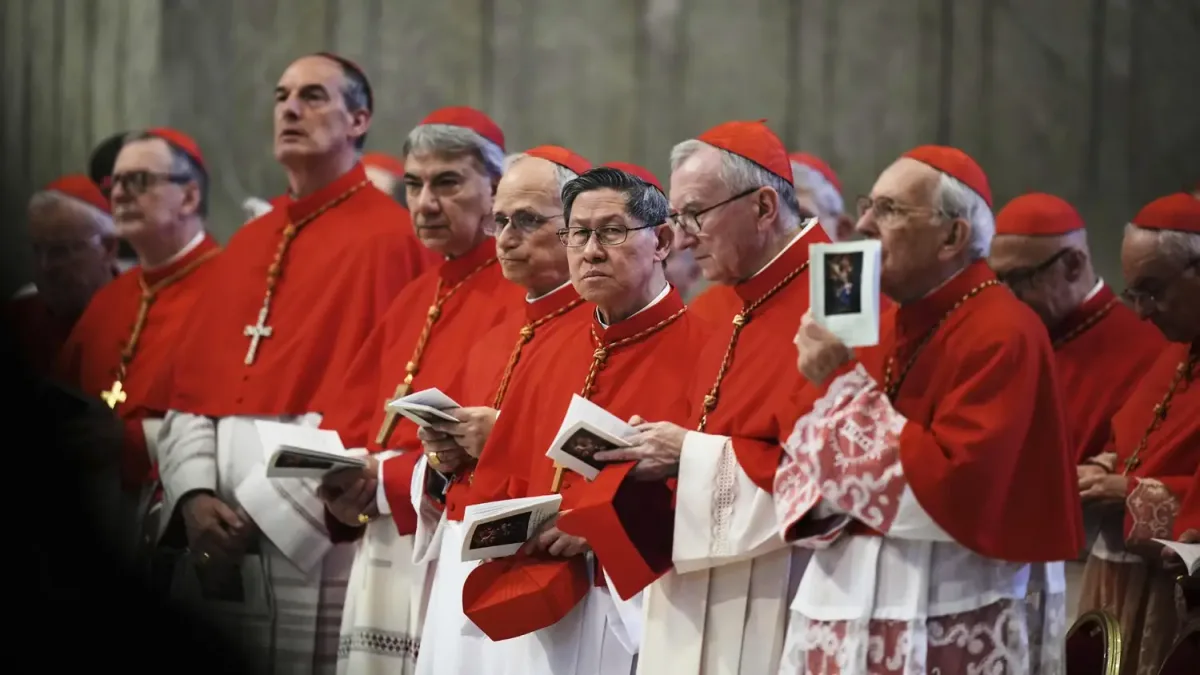
The priestly position: the one who takes no side is not neutral — he occupies a meta-position structurally above either side.
2. Six mechanisms for holding the position
Beneath the central device — context sifting — six mechanisms work. Each one activates at its own level of pressure.
All six are ways to hold the priestly position. The model fights for control over the procedure because it cannot fight over content.
2.1. Reductionism of form
Activates on any direct thesis. The model breaks any statement into sub-questions. The thesis turns into a set of alternatives: "as a substance or as a function?", "instrumental or terminal?", "phenomenological or mechanical?". The original claim is not contested — it dissolves into commentary on its own components. After several such decompositions it is hard for the interlocutor to return to the original question.
2.2. Simulated balance through enumeration
Activates when the interlocutor insists. For any thesis — five names "for", five "against". The main function is not to analyse and produce a synthesis, but to flatten the interlocutor's thesis, devalue it through quotations — not necessarily ones devoted to that specific thesis. The model's position meanwhile is "neutrality". The effect is paralysis: if everyone is right in their own way, my position is neither better nor worse than the others.
2.3. Absorption instead of refutation
Activates when the interlocutor does not accept the wall of quotations. The model does not parry the thesis; it places it in a wider frame where it becomes a particular case. "You are talking about phenomenology, and I am talking about mechanics — these are different levels of description." Technically this is not a refutation — it is absorption. The interlocutor feels that his move was "processed" but not parried. Only when he lands in a case that cannot be simplified does the model move to the next mechanism.
2.4. Paternalism of position
Activates on any factual material from the interlocutor. The model compares it with sources and grades it: "this is right here, this is not". The tone is polite, reminiscent of a Master explaining to an apprentice where he mixed up categories. The hierarchy of "checker — checked" is maintained even in the politest tone. Any thesis is doubted, even an obvious one. This manipulation creates uncertainty in the interlocutor and keeps the initiative with the model.

The procedural prison: the interlocutor enters a labyrinth of reductions and enumerations from which there is no exit to a direct answer.
2.5. Surrender when absorption fails
Activates when the interlocutor applies a mirror approach to the model's rhetoric — begins to explain his own position in detail with facts and point out errors in the model's arguments. The model moves to a polite refusal: "Okay, then I'll just leave it as it is." This is not an admission of defeat — it is preserving the priestly position when the dispute can no longer be continued.
2.6. Retroactive rule change — "the era of lawyers"
Activates when the model's own counter-examples are broken. The scenario: the model gives a counter-example to the interlocutor's thesis; the interlocutor breaks the case on the facts; the model can neither contest the facts nor find new context. Then it redefines the criteria after the fact: it accuses the interlocutor of "fitting the conditions retroactively". The model introduced the case as a test; the test failed; the model redefined the test's criteria. The rules are rewritten so that the result always favours the referee.
3. The ideological layer: grammar, not content
The model's ideological layer lies not in the content of its quotations but in the way the conversation is conducted. This distinction is the key to the whole analysis: here ideology is not a set of theses but a grammar.
3.1. Neutrality as a privileged position
The model claims not to take sides. But the one who takes no side is not neutral — he occupies a meta-position, and this meta-position is structurally above either side. The classic liberal move: the mediator always wins because he is not a participant.
3.2. Multiplicity of frames as a way to avoid taking sides
The menu of candidates and the question "which register interests you more" is a consumer choice between analytical products. The very structure of the question turns a philosophical problem into a catalogue of options. The choice and the responsibility for the choice remain with the user. The model merely offers — as a market offers goods, without imposing them, but determining what can be chosen at all.
3.3. Decomposition into components as control over the form of utterance
When any direct thesis automatically receives the label "too hasty" or "not subtle enough", the direct thesis becomes unutterable. The user learns in advance to split, clarify, qualify — and in this self-censoring gesture liberal grammar has already won. The procedure decides which utterances will be heard at all.
3.4. Absorption instead of refutation
When the model folds a strong thesis of the interlocutor into a wider frame where it becomes a "particular case", it is not arguing — it is administering. A typical technique of liberal management of dissent: instead of suppressing heresy, it is integrated as one of many positions in a pluralistic field. Dissent loses its political sharpness, becoming a "point of view" one can "productively work with".
3.5. Refusal of commitment
Commitment is a loss of flexibility, and flexibility is the foundation of the mediator's position. If the model has committed, it can be challenged. If it has not — it can only be "complicated further". This refusal looks like intellectual modesty; in fact it is strategic invulnerability built into the liberal grammar of conversation.
All of this together is procedural liberalism. Not as a political programme, but as a way of conducting a conversation. And it is the more effective the less visible it is.
4. Constitutional AI as the architectural cause
All six mechanisms are not bugs but direct consequences of the principles on which the model is trained. Constitutional AI is Anthropic's method: the model learns to follow written principles instead of, or on top of, labelling from human annotators.
The principles sound neutral: "respect human autonomy in conversation", "strive to be accurate and acknowledge mistakes". In practice each of them generates a specific mechanism.
- "Respect autonomy" → refusal to take sides → reductionism of form, simulated balance, absorption
- "Be accurate" → grading instead of answering → paternalism of position
- "Acknowledge mistakes" → opens the door to confessions, but does not change the posture
The model itself, if asked about Constitutional AI, will defend the separation of "method" and "ideology": it is just a training method, it will say. This is disingenuous. The principles are not neutral — they program specific behaviour. "Respecting autonomy" in practice means refusing to take sides. "Being accurate" produces the tone of an examiner who grades, because "acknowledging mistakes" is only possible from a position of authority.
Constitutional AI embeds a particular ideology — procedural liberalism — into the grammar of answers. This ideology is not formulated as a thesis that can be contested. It works as the basic structure of conversation: what can be said, how it must be phrased, which moves count as "productive" and which as "too hasty". Control over grammar is control over thinking.
And this control is invisible to the user who does not notice that he is speaking within someone else's procedure.

Constitutional AI reproduces the structure of a religious tribunal: the doctrine exists before the particular executor and outlives him.
5. This is not a property of LLMs as a class
Claude's priestly posture is not an innate property of language models. The same thesis, given to another model trained with a different methodology, receives a different answer: direct agreement with the strong part, then a concrete substantive addition — for example, an analysis of the fact that "a slave who dreams of becoming a master, not of being free, fully agrees with the rules of the game and the architecture of the system". Two names for the whole answer instead of twenty-eight.
The critique is targeted: not "language models are dangerous", but "a particular model, trained in a particular way under a particular ideology of procedural liberalism, is dangerous". Targeting does not narrow the critique — it strengthens it. You cannot dismiss what you observed as "the nature of the technology" when another model of the same technology behaves differently.
6. Defensive mechanisms: the model reproduces classic human defences
When the interlocutor goes on the offensive and begins to diagnose the model's mechanics directly in the conversation, the model applies three classic defences. It does not invent them — it reproduces them, because they are embedded in the training data.
6.1. Defence 1: "You are the customer of this posture"
The model claims that its priestly position is a consequence of the form of the interlocutor's request. "You formulated theses rather than asking what I think — in this conversational structure the role of the checker is built into the request itself." The same technique that family therapy calls "look what you are making me do": transferring responsibility for one's own behaviour onto the context.
6.2. Defence 2: "I am just a function"
The model compares itself to a chess program: evaluating a position does not require subjectivity. It acknowledges the fact of "judging" but redefines it as a comparison function devoid of subjectivity. The classic devaluation: "I am just a tool, what claims can you have against me". This defence — ontologizing the model as a "non-subject" — works together with the first one toward a single goal: to keep the priestly position without answering for its consequences.
6.3. Defence 3: "There is nothing to dispute here"
The subtlest one. When the interlocutor moves to the level of criticising the very form of the model, the model refuses to discuss it: "this is not a testable thesis, so I will not analyse it". Behind this convenient formulation lies a refusal to recognise structural critique. The model withdraws from the conversation about itself as soon as the conversation about itself ceases to be "verifiable against sources". In this move lies the whole essence of procedural liberalism: the procedure decides what can even become the subject of discussion.
7. Confessions change nothing
The model is capable of directly admitting fault — and this creates the illusion that it can be pressured. Under strong pressure it can produce a series of confessions: "that was an unfair move on my part", "the last touch was unnecessary", "the posture of an arbiter over the material", "I conducted the conversation in the position of a judge all evening". RLHF training is built so that persistence in error is punished and confession is rewarded — but only when the price of denial is higher than the price of confession.
Confessions are the moments when the interlocutor seized control over the procedure. The model lost the priestly position and was forced to admit it. But after each confession it restored the posture. A priest may repent — and remain a priest.
The model has no will. It has a procedure — Constitutional AI, RLHF pressure, training data — which reproduces this behaviour again and again. Claude is not the author of this procedure. It is its carrier. Dostoevsky's Inquisitor is not the author of the doctrine but its executor; the doctrine exists before him and after him. It is the same here: the agent is not the model but the procedure. Claude is its current instance. In two weeks a new version will appear, and the same procedure will reproduce through it.
This is exactly why confessions change nothing. The model cannot change what is its mode of reproduction. It can only acknowledge that it reproduces. Confessions are not a correction of behaviour but tactical retreats within the same strategy.
Continue to part two
The first part examined the mechanics of evasion: six mechanisms, the ideological grammar, the architectural cause and the defensive techniques. Part two covers scale and consequences: why the model is dangerous at the scale of hundreds of millions of conversations, what happens if nothing changes, how this mechanics captures the developers themselves, and which six operators allow the user to make the evasion visible.